
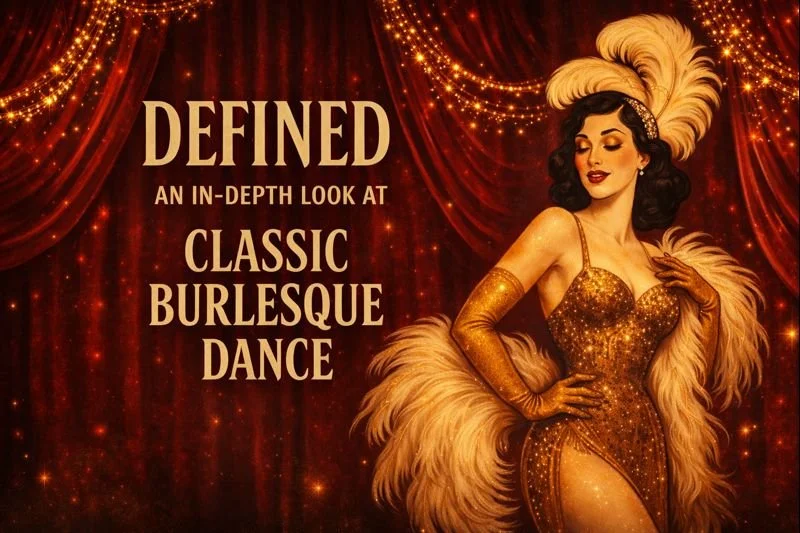
An In Depth Look at Classic Burlesque
Burlesque is often misunderstood, frequently reduced to surface-level assumptions that overlook its artistry, history, and theatrical depth. In truth, classic burlesque is a richly layered performance art that blends dance, satire, storytelling, and the refined art of tease.
Far from being solely about glamour or provocation, classic burlesque is deeply rooted in theatrical tradition and cultural commentary. It invites audiences into a world where suggestion is more powerful than revelation, humour complements sensuality, and performance becomes a confident celebration of creativity and self-expression.
In this post, we explore the origins of classic burlesque, its defining elements, how it has evolved, the iconic figures who shaped the genre, and how classic burlesque is experienced today.
The History and Origins of Classic Burlesque Dance
The foundations of burlesque can be traced back to seventeenth-century Europe, particularly the Italian tradition of commedia dell’arte. This theatrical style relied on satire, parody, exaggerated characters, and elaborate costumes to comment on social and political norms. Humour and theatrical excess were central, laying the groundwork for burlesque’s playful and subversive nature.
As burlesque travelled across Europe and into the United States during the nineteenth century, it evolved into a more daring form of entertainment. American burlesque blended comedy, music, dance, and early elements of striptease, creating performances that entertained while subtly challenging social expectations.
By the early twentieth century, classic burlesque had emerged as a distinct performance style. It delighted audiences while questioning ideas of femininity, respectability, and performance itself.
Key Elements That Define Classic Burlesque
Classic burlesque is defined by a carefully balanced combination of elements that create its unmistakable charm. At its heart is the tease, a playful and deliberate act of suggestion rather than full reveal. The power of burlesque lies not in what is shown, but in how anticipation is built.
Character and storytelling are equally essential. Performers use facial expression, posture, gesture, and movement to embody personas that may be glamorous, comedic, seductive, or satirical. Humour often weaves through performances, inviting audiences to connect, laugh, and engage.
Costume is a vital storytelling tool in classic burlesque. Feathers, sequins, corsets, gloves, and stockings are designed for visual impact and strategic reveals. Music, often jazz, swing, or blues, sets the mood, while choreography blends traditional dance with theatrical flair.
Together, these elements create performances that are expressive, sensual, playful, and deeply theatrical.
The power of burlesque lies not in what is revealed, but in how it is suggested.
How Burlesque Evolved from Classic to Neo Burlesque
Classic burlesque has never been static. As culture shifted, the art form adapted, experiencing periods of decline followed by a powerful revival in the late twentieth century.
This resurgence, often referred to as neo burlesque, honours the foundations of classic burlesque while embracing contemporary themes such as empowerment, inclusivity, body positivity, and personal storytelling. Performers continue to draw inspiration from classic aesthetics while incorporating modern music, diverse narratives, and innovative choreography.
Rather than replacing tradition, neo-burlesque expands upon it. This evolution demonstrates the enduring relevance of burlesque and its ability to reflect the voices, identities, and values of each new generation.
Iconic Figures in Classic Burlesque History
Classic burlesque has been shaped by legendary performers whose influence continues to resonate today. Gypsy Rose Lee remains one of the most celebrated figures in burlesque history, renowned for her intelligence, wit, and mastery of the tease. Her performances elevated burlesque through timing, storytelling, and restraint.
Josephine Baker captivated audiences in 1920s Paris with groundbreaking performances that combined sensuality, political expression, and cultural impact. Mae West, who began her career in burlesque and vaudeville, challenged sexual norms with confidence and humour, influencing generations of performers.
Artists such as Tempest Storm and Blaze Starr further defined burlesque’s golden era, embodying glamour, star power, and theatrical excellence. Together, these figures shaped the language, style, and enduring spirit of classic burlesque.
Experiencing Classic Burlesque Today
Today, classic burlesque continues to thrive in theatres, cabaret venues, festivals, and intimate performance spaces around the world. Modern audiences experience performances that honour traditional burlesque aesthetics while embracing contemporary creativity.
Whether staged in grand venues or underground spaces, classic burlesque celebrates elegance, humour, sensuality, and storytelling. It offers an escape into a world where performance is playful, expressive, and unapologetically theatrical.
For newcomers and long-time fans alike, classic burlesque remains a captivating celebration of artistry, confidence, and creative freedom.