
Bellyesque Defined
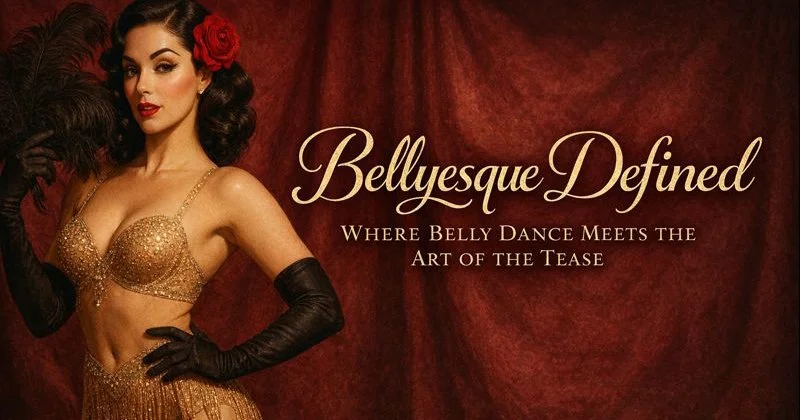
Where Belly Dance Meets the Art of the Tease
Bellyesque is often described as a fusion, but that word alone barely captures its depth and nuance. More than a blend of belly dance and burlesque, bellyesque is a performance style rooted in storytelling, sensuality, and theatrical presence. It honours the technical foundations of Middle Eastern dance while embracing burlesque’s playful glamour and intentional tease.
In this post, we explore bellyesque as an art form, looking at its origins, defining characteristics, evolution, key influences, and how bellyesque is expressed on stages today.
The Roots of Bellyesque Performance
To understand bellyesque, it is essential to acknowledge its two powerful lineages.
Belly dance has deep roots across the Middle East, North Africa, and parts of the Mediterranean. Traditionally connected to celebration, ritual, and feminine expression, it emphasises grounded movement, intricate isolations, rhythmic interpretation, and storytelling through the body. Musicality and emotional connection have always been central to the form.
Burlesque, by contrast, emerged from European theatrical satire and evolved in the United States into a glamorous, comedic, and subversive performance style. Burlesque prioritises character, theatrical pacing, and the art of suggestion, using confidence, humour, and exaggeration to engage audiences.
Bellyesque emerged when performers began intentionally weaving these traditions together, combining technical dance with theatrical tease. The result is a style that feels both ancient and modern, reverent and rebellious.
Defining Elements of Bellyesque
At the heart of bellyesque is intention. Every movement, pause, and choice is deliberate.
The movement vocabulary draws heavily from belly dance, incorporating hip articulations, shimmies, undulations, and layered isolations. These movements are often slowed, accented, or exaggerated to heighten sensual impact and visual clarity. Musical interpretation remains essential, with dancers responding intimately to melody, percussion, and emotional tone.
From burlesque comes the tease. This is not necessarily expressed through nudity, but through pacing, withholding, and connection. Eye contact, facial expression, playful confidence, and awareness of the audience are as important as physical technique. Many bellyesque performances also incorporate humour or self-awareness, inviting the audience into a shared experience rather than presenting a distant spectacle.
Costuming plays a significant role in defining bellyesque. Outfits may include bras, belts, skirts, gloves, stockings, corsetry, or dramatic outer layers designed for reveal. Rather than adhering strictly to traditional belly dance or classic burlesque aesthetics, bellyesque costuming lives between the two, luxurious, expressive, and deeply personal.
Evolution and Modern Interpretations
Like burlesque itself, bellyesque continues to evolve. Early performances often leaned into vintage glamour and cabaret influence, but over time, the style expanded to include darker themes, experimental music, contemporary costuming, and deeply personal storytelling.
Modern bellyesque performers frequently use the form to explore identity, empowerment, sensuality, and self-definition. Body positivity and inclusivity are central to many bellyesque spaces, challenging narrow ideas of who is allowed to be expressive, sensual, or commanding on stage.
Music choices now range widely, from traditional Middle Eastern compositions to jazz, dark cabaret, electronic tracks, and cinematic scores. This openness allows bellyesque to remain fluid and responsive to cultural shifts while still respecting its roots.
Influences and Pioneers of Bellyesque
Bellyesque does not have a single originator, but it has been shaped by performers willing to cross genre boundaries. Dancers deeply trained in belly dance who were inspired by burlesque’s theatricality played a crucial role in shaping the style.
Classic burlesque icons such as Gypsy Rose Lee influenced bellyesque philosophy through their mastery of pacing, intelligence of tease, and audience connection. At the same time, legendary belly dancers who embodied emotional depth, musicality, and presence laid the groundwork for bellyesque’s expressive power.
Today, teachers and performers around the world continue to refine bellyesque, passing on not just movement, but performance philosophy centred on confidence, intention, and connection.
Experiencing Bellyesque Today
Bellyesque can be experienced on cabaret stages, burlesque festivals, belly dance showcases, and intimate performance spaces worldwide. Some performances lean heavily into glamour and tease, while others focus on mood, narrative, or emotional vulnerability.
What unites all bellyesque performances is presence. Bellyesque invites audiences to slow down, to watch closely, and to engage with performance as an exchange rather than a display. Sensuality is presented not as something to consume, but as something to witness, share, and respect.
For performers, bellyesque offers a powerful avenue for artistic exploration. For audiences, it offers a layered, playful, and evocative experience that celebrates confidence, expression, and the beauty of intentional movement.