
Cabaresque and Burlesque, Defined
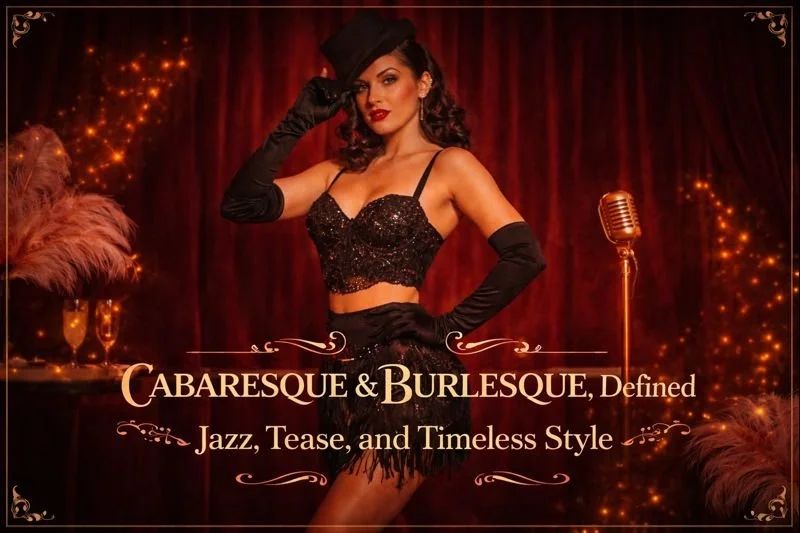
Jazz, Tease, and Timeless Style
Cabaresque and burlesque exist at the intersection of glamour and grit, elegance and irreverence. Often mistaken for simple spectacle, these performance traditions are in fact richly layered theatrical art forms rooted in rebellion, storytelling, and self-expression. They invite audiences not merely to observe, but to engage, to lean closer, to laugh knowingly, and to become part of the moment.
In this blog post, we take an in-depth look at cabaresque and classic burlesque, exploring their origins, defining aesthetics, cultural evolution, iconic figures, and how these enduring styles are experienced on stages today.
The Origins of Cabaret and Burlesque
Cabaret emerged in late nineteenth century Europe, most notably in Paris, as an intimate alternative to formal theatre. These early venues were vibrant, candlelit spaces where singers, dancers, poets, and provocateurs performed just feet away from their audiences. Cabaret thrived on social commentary, political satire, and bold explorations of identity and sexuality, all wrapped in wit, music, and theatrical charm.
Burlesque developed alongside cabaret, drawing heavily from parody and exaggeration. It was playful, self-aware, and unapologetically subversive. Using humour, glamour, and sensuality, burlesque performances gently mocked societal expectations while celebrating confidence and individuality.
As both forms travelled internationally, particularly to the United States, they absorbed influences from jazz, vaudeville, musical theatre, and striptease. This cross-pollination transformed cabaret and burlesque into expansive performance styles that prioritised character, storytelling, and creative freedom.
Defining the Cabaresque Aesthetic
At the heart of cabaresque and classic burlesque is intention. Every glance, pause, gesture, and reveal is deliberate. The tease is never hurried, it is an invitation rather than a demand.
Storytelling is central to the performance. Artists embody fully realised personas that may be glamorous, mischievous, melancholic, defiant, or absurd. They guide the audience through emotional and narrative arcs using expression, timing, and presence. Humour and satire are not decorative additions but structural foundations, allowing performances to shift seamlessly between sophistication and playfulness.
Costuming is equally significant. Corsetry, gloves, stockings, heels, feathers, fringe, and tailored silhouettes are chosen not only for visual impact but for their theatrical potential. Each layer removed, or intentionally kept, contributes to the narrative. Music, often rooted in jazz, blues, swing, or chanson, sets the emotional tone, while choreography balances refined lines with expressive exaggeration.
The result is a performance style that is sensual without passivity, playful without superficiality, and theatrical without losing intimacy.
Evolution and the Rise of Modern Cabaret
Cabaret and burlesque have endured periods of censorship, backlash, and decline, yet they have never disappeared. Instead, they have continually adapted, reshaping themselves in response to cultural change.
The late twentieth century revival of cabaret and burlesque reestablished these forms as powerful spaces for empowerment, self-authorship, and inclusivity. Contemporary performers honour classic aesthetics while exploring modern themes such as identity, body autonomy, politics, and personal narrative.
Today’s cabaresque and burlesque artists stand firmly on the foundations of tradition while expanding them boldly. Gender norms blur, bodies of all shapes and ages take centre stage, and stories once marginalised are told with wit, confidence, and unapologetic flair.
Icons Who Shaped the Stage
The language of cabaret and burlesque has been shaped by iconic figures whose influence continues to resonate. Gypsy Rose Lee transformed the tease into an intellectual art, mastering restraint, timing, and wit. Josephine Baker captivated international audiences with groundbreaking performances that fused sensuality, charisma, and cultural impact.
Mae West challenged censorship with fearless humour and sexual autonomy, while mid-twentieth-century performers such as Tempest Storm embodied the glamour, precision, and commanding presence of burlesque’s golden era. These artists were not simply entertainers, they were architects of a performance tradition that continues to inspire and evolve.
Cabaret and Burlesque in the Present Day
Today, cabaresque and burlesque thrive in theatres, underground venues, festivals, and intimate salons around the world. Performances range from lavish, vintage-inspired spectacles to stripped-back, emotionally resonant storytelling.
What remains constant is the relationship between performer and audience. Cabaret demands presence. Burlesque invites participation. Together, they create shared experiences built on trust, curiosity, and delight.
In a culture that often prioritises speed and immediacy, these art forms remind us of the power of pause, suggestion, and intentional expression.
A Living, Breathing Art Form
Cabaresque and classic burlesque are not relics of the past. They are living traditions. They endure because they are built on courage, creativity, and the audacity to be seen.
For performers and audiences alike, stepping into the world of cabaret and burlesque is an act of imagination. A return to glamour. A flirtation with rebellion. A celebration of performance as both art and liberation.