
Neo-Burlesque Defined
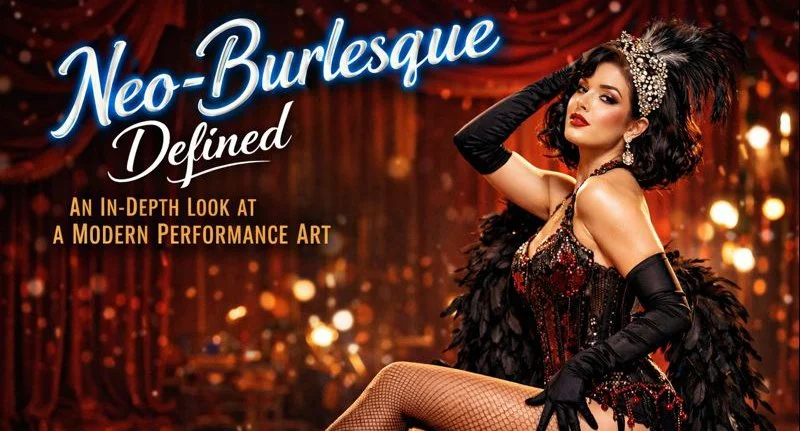
An In-Depth Look at a Modern Performance Art
Neo-burlesque is often described as a revival of classic burlesque, but it is far more than a nostalgic return to the past. This modern performance art builds upon tradition while transforming burlesque into a contemporary platform for self-expression, cultural commentary, and creative freedom.
Rooted in the foundations of classic burlesque, neo-burlesque embraces diversity, challenges convention, and redefines what sensual performance can look like in the modern world. It celebrates individuality, personal voice, and artistic autonomy, making it one of the most dynamic and evolving forms of burlesque today.
In this post, we explore neo-burlesque in depth, examining its origins, defining elements, cultural significance, influential figures, and how neo-burlesque is experienced today.
The Origins of Neo-Burlesque
Neo-burlesque emerged in the late twentieth century during a renewed interest in vintage aesthetics, alternative performance art, and feminist discourse. While classic burlesque had declined in mainstream popularity by the mid-1900s, underground performers and artists began reclaiming the art form as a means of empowerment and self-definition.
This resurgence was not about recreating the past, but reinterpreting it. Neo-burlesque artists drew inspiration from classic burlesque’s glamour, tease, and theatricality while responding to contemporary conversations around identity, autonomy, sexuality, and representation.
As the movement grew, neo-burlesque found homes in cabarets, fringe festivals, art spaces, and alternative theatres. These environments encouraged experimentation, storytelling, and creative risk, allowing neo-burlesque to develop into a global and ever-evolving performance movement.
Defining Elements of Neo-Burlesque
While neo-burlesque honours many traditional burlesque principles, it is defined by flexibility and creative freedom. There is no single aesthetic or narrative that defines the genre.
At its core, neo-burlesque is intentional. Performances are often built around concept and meaning rather than expectation. Themes may include empowerment, humour, vulnerability, fantasy, politics, or personal storytelling. Tease remains important, but expression takes priority over tradition.
Costuming in neo-burlesque varies widely, ranging from classic glamour to avant-garde, minimalist, fetish-inspired, or handmade designs. Rather than conforming to a narrow ideal, neo-burlesque celebrates body diversity, individuality, and authenticity.
Music and movement are equally expansive. Performers may use jazz, rock, electronic, hip-hop, spoken word, or experimental soundscapes. Choreography often blends dance with theatrical gesture, symbolism, and emotional expression.
Together, these elements create performances that are personal, visually striking, and emotionally resonant.
Neo-Burlesque as Cultural Commentary
One of neo-burlesque’s most powerful qualities is its role as cultural commentary. Many performers use the stage to challenge stereotypes, confront societal norms, and reclaim narratives around gender, sexuality, and power.
Through satire, symbolism, humour, and vulnerability, neo-burlesque invites audiences to question assumptions about desire, performance, and identity. It allows performers to speak boldly while remaining playful, using the language of burlesque to explore complex ideas.
This approach places neo-burlesque alongside contemporary performance art, blurring the lines between entertainment, activism, and personal expression.
Influential Figures in Neo-Burlesque
Neo-burlesque has been shaped by a diverse range of performers, producers, and educators who expanded the art form’s possibilities. Artists such as Dita Von Teese helped reintroduce burlesque to mainstream audiences while maintaining creative control and artistic integrity.
Performers like Dirty Martini and World Famous BOB challenged traditional beauty standards and broadened representation on stage. Their work helped redefine who burlesque is for and what it can look like.
Rather than relying on a single aesthetic or icon, neo-burlesque thrives through collective creativity. International scenes and festivals continue to contribute new voices, styles, and perspectives, keeping the art form vibrant and relevant.
Experiencing Neo-Burlesque Today
Today, neo-burlesque can be experienced in intimate cabarets, underground venues, large-scale festivals, and theatrical productions around the world. No two performances are alike, and audiences are often invited into imaginative, provocative, humorous, or deeply emotional worlds.
Modern neo-burlesque prioritises inclusivity, consent, and authentic audience connection. It welcomes curiosity and rewards open-mindedness, offering performances that can be glamorous, strange, political, tender, or defiantly bold.
For newcomers, neo-burlesque offers an accessible entry into a creative and supportive artistic community. For long-time fans, it continues to evolve, proving that burlesque is not a relic of the past, but a living and expressive performance art.